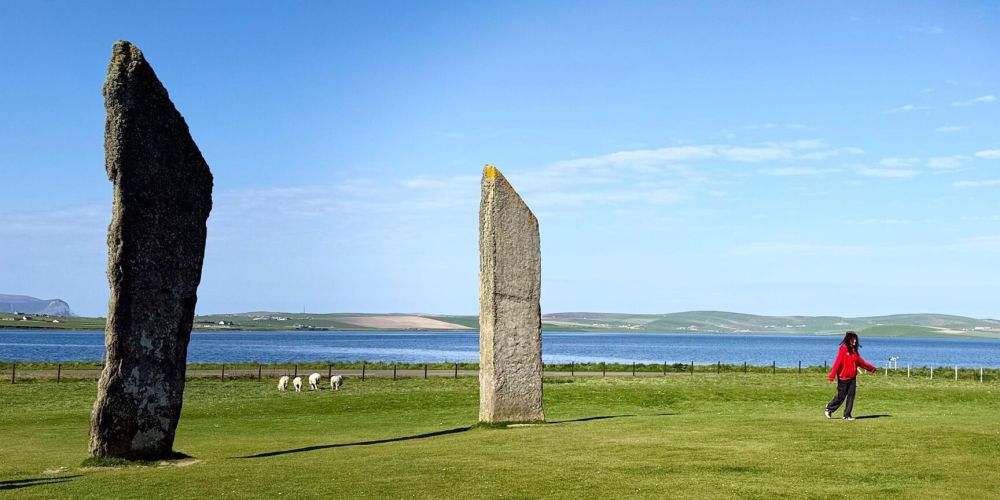
Scotland’s Stone Circles, Pagan History and the Power of the Solstice
Scotland’s stone circles are not just ancient monuments. They are sacred landscapes shaped by ritual, astronomy and belief. From the windswept islands of the Outer Hebrides to the green heart of Orkney and the Highlands beyond, these prehistoric sites connect us to a time when the sun, moon and land guided spiritual life.
If you are drawn to pagan history, folklore, spirituality or the mystery of the solstice, Scotland offers some of the most powerful stone circles in Europe.
And yes, the stones are waiting.

The Callanish Stones and the Return of Visitors
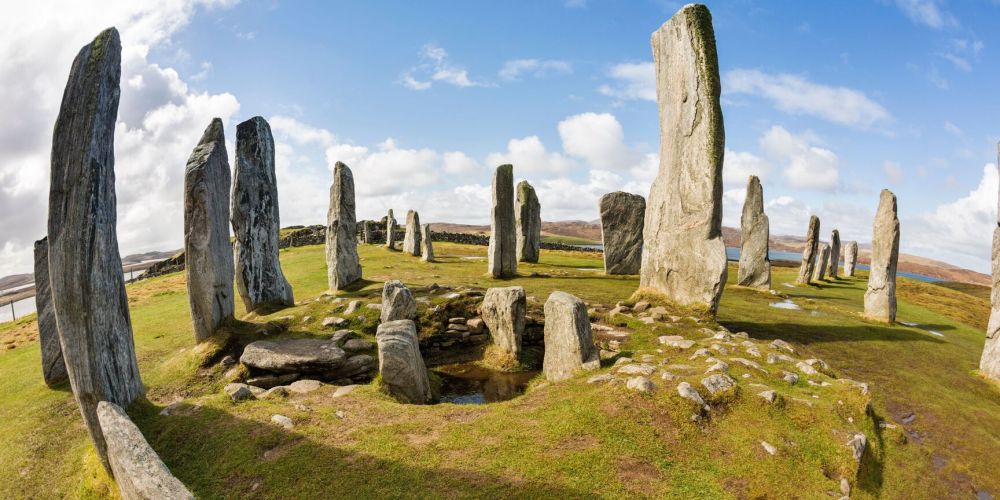
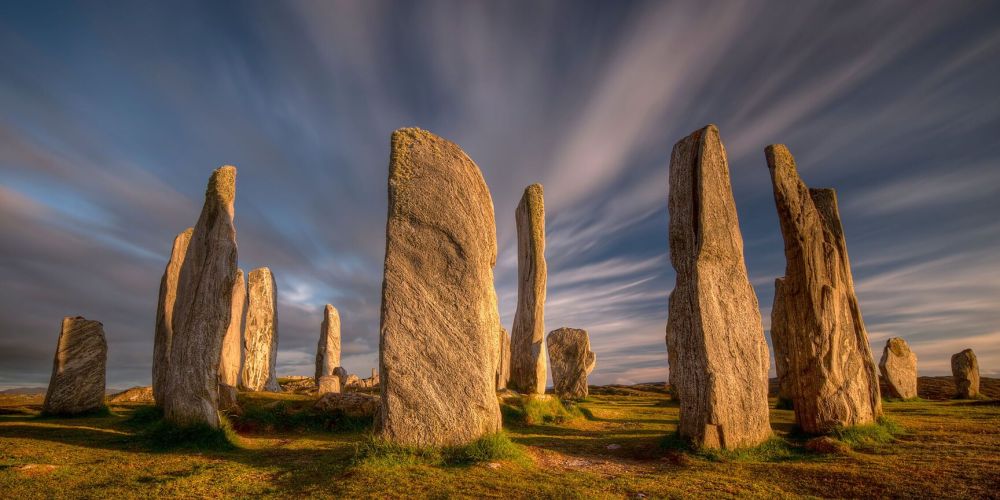
The Callanish Stones (or Calanais Standing Stones) stand on the west coast of the Isle of Lewis in the Outer Hebrides. Erected around 3000 BCE, they predate Stonehenge and form a striking cross shaped arrangement centred around a tall monolith.
The stones themselves are free and open to visitors, and you can walk among them at any time. The Callanish Visitor Centre has been undergoing major redevelopment, but access to the monument has never been restricted. The new centre is expected to significantly enhance interpretation and visitor facilities, while ensuring long term protection of this extraordinary site.
Archaeological excavations show that Callanish was built on top of an earlier Neolithic chambered tomb. Later evidence suggests ritual activity continued for centuries. Some researchers believe the site was aligned to lunar cycles, particularly the major lunar standstill that occurs every 18.6 years, when the moon appears to skim the southern horizon. During this event, the moon can appear to roll along the hills behind the stones.
In Gaelic folklore, the stones were said to be giants who refused to convert to Christianity and were turned to stone. This blending of pagan belief and later Christian storytelling adds another layer to the site’s mystique.
For those seeking spiritual energy at the solstice or simply a profound sense of place, Callanish remains one of Scotland’s most atmospheric sacred landscapes.
The Heart of Neolithic Orkney
Orkney is one of the most important prehistoric landscapes in Europe. The Ring of Brodgar and the Stones of Stenness stand within a UNESCO recognised landscape known as the Heart of Neolithic Orkney.
The Ring of Brodgar was constructed around 2500 BCE and originally contained 60 stones, 27 of which still stand today. It is set dramatically between the Loch of Harray and the Loch of Stenness. Excavations have revealed ceremonial structures nearby, suggesting this was a vast ritual complex rather than an isolated monument.
Just a short walk away, the Stones of Stenness may be among the earliest stone circles in Britain, dating to around 3100 BCE. These slender monoliths once stood within a large henge ditch. Evidence of animal bone deposits and feasting nearby suggests communal ceremonies tied to seasonal cycles.
At midwinter, the setting sun aligns with the landscape around these monuments. The relationship between monument, horizon and celestial movement reflects a sophisticated understanding of astronomy and timekeeping.
Clava Cairns and Highland Ritual Landscapes
Near Inverness, the Clava Cairns offer a different but equally compelling expression of prehistoric spirituality. Built around 2000 BCE in the Bronze Age, these passage graves and standing stones are aligned with the midwinter sunset.
On the shortest day of the year, light can enter the central chamber of certain cairns, illuminating the interior in a powerful symbolic gesture. This connection between darkness, death and rebirth is central to many pagan interpretations of the winter solstice.
The kerbstones surrounding the cairns are decorated with cup marks and carved symbols. Their exact meaning remains unknown, but they likely held ritual significance.
Kilmartin Glen and Ancient Argyll
In Argyll, the valley of Kilmartin Glen contains one of the densest concentrations of prehistoric monuments in Scotland. Stone circles such as Temple Wood, burial cairns and standing stones sit within a landscape that was sacred for thousands of years.
Temple Wood includes both a stone circle and an earlier timber circle beneath it, revealing layers of ceremonial reuse. Artefacts found here suggest cremation rituals and ancestor veneration. The positioning of monuments along natural ridgelines and sightlines indicates careful planning and cosmological awareness.
Other Significant Stone Circles in Scotland
Scotland is rich in lesser known but equally compelling sites.
The Machrie Moor Stone Circles on the Isle of Arran include multiple circles and standing stones set against the dramatic backdrop of Goat Fell. Some stones are unusually tall and slender. Artefacts discovered nearby indicate ritual use from the Neolithic through the Bronze Age.
The Loanhead of Daviot Stone Circle is a recumbent stone circle, a regional style found mainly in north east Scotland. These circles feature a large horizontal stone flanked by uprights, often aligned with lunar events. Cremation remains have been discovered within the circle, linking astronomical observation with funerary rites.
The East Aquhorthies Stone Circle is one of the best preserved recumbent circles. Built around 3000 to 2500 BCE, it demonstrates precise construction and a clear understanding of horizon alignment.
Paganism, Folklore and the Solstice
Long before Christianity, communities across Scotland observed the cycles of the sun and moon. The solstices and equinoxes marked turning points in the agricultural and ritual year.
The winter solstice symbolised rebirth, the return of light and the promise of renewal. The summer solstice celebrated abundance and fertility. Many stone circles appear aligned to these events, reinforcing their role as ceremonial calendars.
Modern pagan and Druid communities continue to gather at sites like Callanish and the Ring of Brodgar during solstice celebrations. While interpretations vary, the sense of connection to land, sky and ancestral tradition remains powerful.
Folklore across Scotland speaks of standing stones as petrified beings, fairy portals or guardians of the land. Even after Christianisation, local traditions preserved the sense that these were not ordinary places.
Experience Scotland’s Sacred Landscapes
Reading about stone circles is one thing. Standing within them as the light shifts across ancient stones is another.
Our tours bring you into the heart of these landscapes:
- Explore Orkney’s Neolithic wonders on our Orkney tours
- Discover the Callanish Stones and the wild beauty of Lewis and Harris on our Hebrides tours
- Journey through multiple regions, from Kilmartin Glen to Clava Cairns, on our multi day Scotland tours
For travellers interested in pagan history, prehistoric Scotland, solstice alignments, Celtic spirituality or ancient folklore, these journeys offer depth, context and unforgettable atmosphere.
Scotland’s stone circles are not relics of a forgotten world. They are living reminders that people once gathered here to mark time, honour ancestors and watch the turning of the sky.
And you can still stand where they stood.