The Most Beautiful Drives in Scotland: 7 Scenic Routes Beyond the NC500
When people start planning a Scotland road trip, one route tends to dominate the conversation: the NC500. And while the North Coast 500 absolutely deserves its reputation, it’s only one chapter in Scotland’s story. Because some of the country’s most unforgettable drives happen far beyond that famous loop. They wind through ancient glens, across dramatic mountain passes, alongside sea lochs and into corners of the Highlands that many visitors never discover.
The truth is, Scotland was made to be explored by road. Not because it’s the fastest way to travel, but because the journey itself becomes part of the experience. One minute you’re driving through a broad Highland valley, the next you’re pulling over beside a hidden beach, spotting red deer on a hillside or watching mist roll across a mountain ridge that wasn’t even on your itinerary.
If you’re looking for the most scenic drives in Scotland, these are the routes we’d recommend again and again.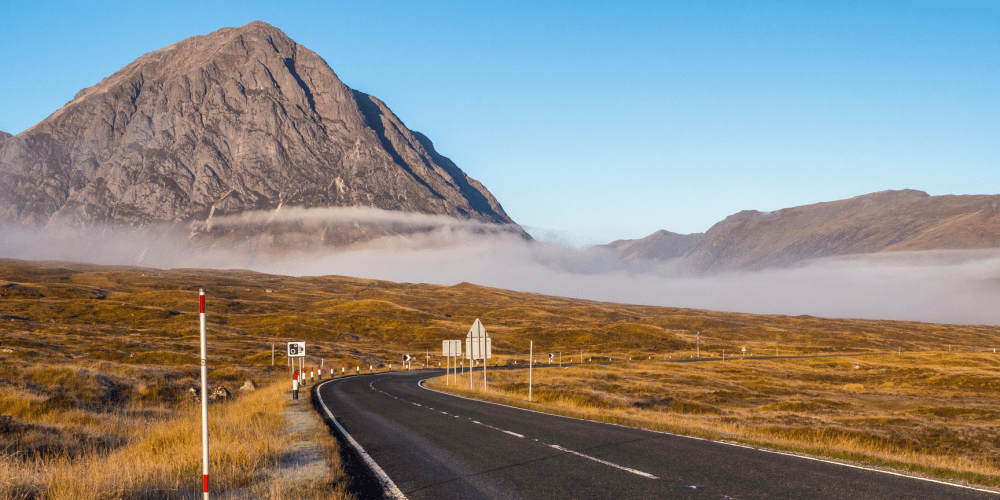
1. Glencoe (A82), Scotland’s Most Cinematic Drive
Why You Should Drive It
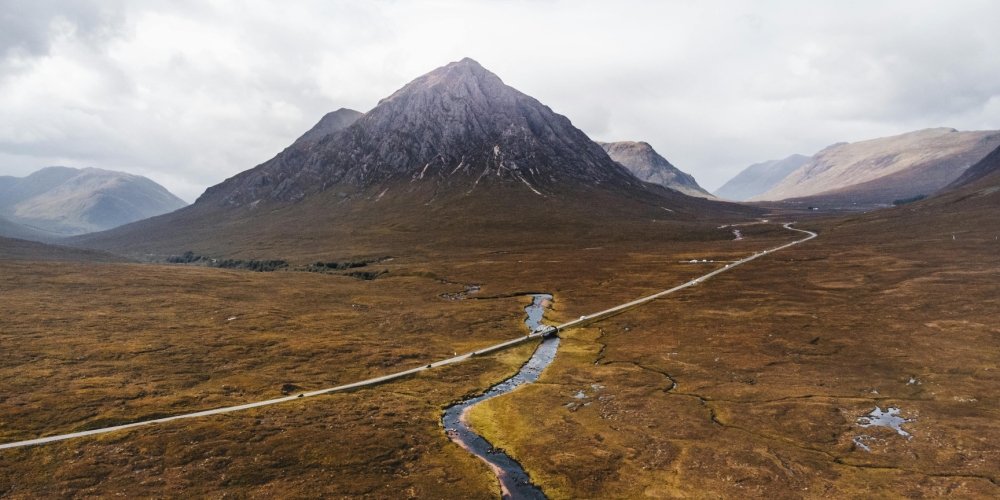
Most mountain roads impress because of the views, but Glencoe is different because of the scale. What makes this drive memorable isn’t a single viewpoint or landmark, but the feeling of travelling through a landscape that seems far larger than the road itself. The mountains dominate the horizon, close in around the glen and constantly shift character as the weather changes. On a clear day, the peaks appear sharp and imposing. Under low cloud, the entire landscape feels darker, moodier and somehow even more beautiful. It’s one of the few places in Scotland where people who rarely stop for scenery find themselves pulling over again and again. If you’ve ever imagined driving through the Scottish Highlands, there’s a good chance this is the landscape you were picturing.
Start & End
Tyndrum to Fort William
Distance
Approx. 40 miles (64 km)
Allow
2–4 hours
Highlights
- Rannoch Moor
- Buachaille Etive Mòr
- Three Sisters Viewpoint
- Loch Achtriochtan
Local Insider Tip
Many visitors rush through Glencoe on the way to Skye or Fort William. The best time to experience it is often late afternoon when day-trippers have moved on and the lower sun begins picking out details in the mountains that disappear under harsher midday light.
2. Glen Etive, the Hidden Highland Favourite
Why You Should Drive It
Scotland has no shortage of beautiful roads, but very few create the same sense of escape as Glen Etive. Within minutes of leaving the A82, the traffic disappears and the landscape begins to feel unexpectedly remote. The road doesn’t lead to a famous attraction or major destination, which is precisely what makes it special. You’re driving into the glen simply to experience the glen itself. The further you travel, the quieter everything becomes. Mountains close in around the valley, the River Etive winds alongside the road and the sense of modern life gradually fades into the background. In a country increasingly defined by bucket-list locations, Glen Etive remains refreshingly simple.
Start & End
Kingshouse Junction to Loch Etive
Distance
Approx. 24 miles return
Allow
1.5–3 hours
Highlights
- River Etive
- Skyfall filming location
- Highland wildlife
- Remote mountain scenery
Local Insider Tip
Many visitors stop at the famous Skyfall viewpoint before turning around. Continue all the way to the end of the road and you’ll discover a quieter, less-visited side of the glen that many travellers never see.
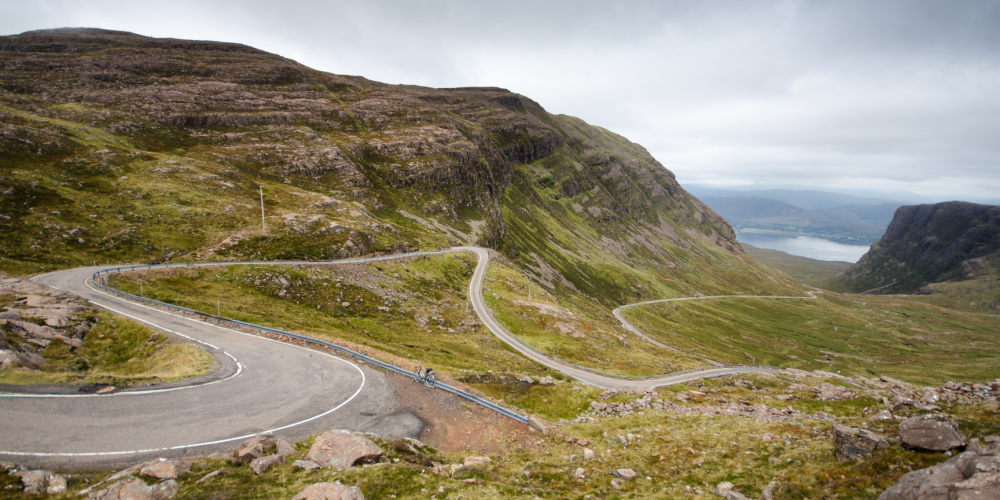
3. Bealach na Bà & Applecross, Scotland’s Most Spectacular Mountain Pass
Why You Should Drive It
Many scenic drives reveal their best views gradually: Bealach na Bà builds anticipation mile after mile. Originally created as a historic drovers’ route, the road climbs steeply through a series of dramatic hairpin bends before reaching one of the most remarkable viewpoints in Britain. With every twist in the road, the landscape opens wider until the mountains, coastline and islands of Scotland’s west coast stretch out beneath you. The destination is beautiful, but that’s not really the point. This is one of those rare roads where the journey itself becomes the experience.
Start & End
Tornapress to Applecross
Distance
Approx. 11 miles (18 km)
Allow
2–3 hours
Highlights
- Historic mountain pass
- Hairpin bends
- Summit viewpoint
- Applecross village
Local Insider Tip
Check the weather before committing to the pass. Clear conditions transform the experience completely, while low cloud can hide many of the views that make the route famous.
4. The Road to the Isle of Skye, Scotland’s Most Anticipated Journey
Why You Should Drive It
Most journeys become memorable because of the destination, and this one succeeds because the destination keeps arriving early. Long before you reach Skye, you’ll encounter some of Scotland’s best-known scenery. Loch Cluanie unfolds beneath towering mountains. Eilean Donan Castle appears exactly where you hope it will. The landscape grows more dramatic with every mile. What’s remarkable is how perfectly the route builds anticipation. Rather than rushing you towards Skye, it introduces the scenery gradually, creating one of the most satisfying arrivals anywhere in Scotland.
Start & End
Fort William to Portree
Distance
Approx. 110 miles (177 km)
Allow
A full day
Highlights
- Loch Cluanie
- Eilean Donan Castle
- Skye Bridge
- Cuillin views
Local Insider Tip
If time allows, leave the main road briefly and spend time around Glen Shiel. Some of the most impressive mountain scenery of the entire journey lies just beyond the viewpoints where most visitors stop.
5. Cairngorms & Glenshee, Scotland’s Most Underrated Scenic Route
Why You Should Drive It
The Highlands often get associated with dramatic peaks, rugged coastlines and wild weather, and Glenshee tells a different story. This is a landscape of broad valleys, ancient forests, winding rivers and expansive mountain plateaus. It feels quieter than the west coast and less crowded than many of Scotland’s better-known routes, yet no less impressive. There’s a sense of space here that rewards travellers willing to slow down and pay attention. The scenery doesn’t demand attention in quite the same way as Glencoe. Instead, it unfolds gradually, revealing its character over the course of the journey.
Start & End
Blairgowrie to Braemar
Distance
Approx. 40 miles (64 km)
Allow
3–5 hours
Highlights
- Glenshee
- Devil’s Elbow
- Braemar
- Cairngorms National Park
Local Insider Tip
Don’t simply drive through. Braemar is one of Scotland’s most attractive Highland villages and makes an excellent place to break up the journey. Autumn is when this route truly shines. The combination of changing colours, lower sunlight and increased wildlife activity makes September and October particularly rewarding.
6. Assynt & the Northwest Highlands, Scotland at Its Wildest
Why You Should Drive It
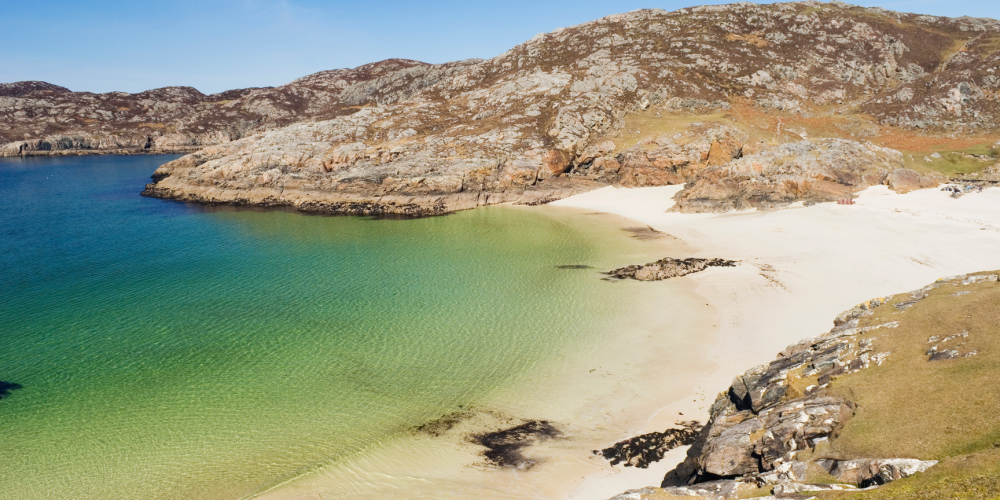
If much of Scotland feels ancient, Assynt somehow feels older still. The mountains here don’t form dramatic ranges or continuous ridgelines. Instead, they rise independently from the landscape, creating distinctive silhouettes unlike anywhere else in Britain. Combined with vast skies, quiet roads and startlingly beautiful beaches, the result is a region that feels genuinely different from the rest of the Highlands. It’s a place that constantly surprises you. Just when you think you’ve seen the best view of the day, another corner reveals something entirely unexpected.
Start & End
Ullapool to Lochinver
Distance
Approx. 70 miles (113 km)
Allow
A full day
Highlights
- Suilven
- Stac Pollaidh
- Loch Assynt
- Achmelvich Beach
Local Insider Tip
Most visitors focus on the mountains, but some of Assynt’s greatest surprises are found along the coastline. Build time into your day for unplanned stops because this is one of the few parts of Scotland where the scenery between locations can be just as memorable as the destinations themselves.
7. Argyll Coastal Route, Scotland’s Most Relaxing Scenic Drive
Why You Should Drive It
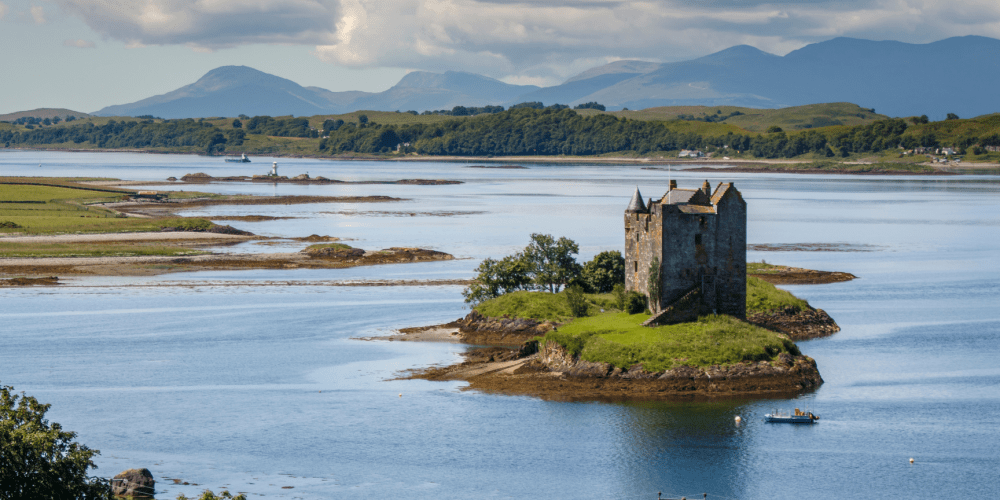
Argyll doesn’t compete for attention in the way that Skye or Glencoe does, instead, it gradually wins people over. The route combines sea lochs, castles, fishing villages and centuries of history without ever feeling crowded or over-visited. There is always something around the next bend, but nothing feels rushed or overdeveloped. It’s a road trip that rewards curiosity rather than speed. For travellers looking to experience a quieter, more authentic side of Scotland, few routes offer such a satisfying balance of scenery, culture and history.
Start & End
Tarbet to Fort William
Distance
Approx. 129 miles (208 km)
Allow
1–2 days
Highlights
- Loch Fyne
- Inveraray
- Kilmartin Glen
- Castle Stalker
Local Insider Tip
Take time to stop in Inveraray rather than treating it as a quick photo opportunity. Between the waterfront, historic buildings and surrounding scenery, it’s one of the most enjoyable small towns on Scotland’s west coast.
Which Scotland Drive Is Right For You?
For dramatic Highland scenery: Choose Glencoe, where towering mountains, vast open landscapes and constantly changing light create one of Scotland’s most memorable drives.
For peace and solitude: Head to Glen Etive, a quieter route that trades famous landmarks for a genuine sense of remoteness and escape.
For mountain passes and adventure: Drive Bealach na Bà, Scotland’s most thrilling road, with steep climbs, hairpin bends and spectacular coastal views.
For first-time visitors: The Road to Skye combines some of Scotland’s most iconic scenery with the excitement of arriving on the country’s most famous island.
For autumn colours and wildlife: Explore the Cairngorms & Glenshee, where golden forests, open moorland and frequent wildlife sightings make autumn particularly special.
For remote landscapes: Choose Assynt, where striking mountains, quiet roads and unexpected beaches create a side of Scotland few visitors experience.
For coastal scenery and history: Follow the Argyll Coastal Route, a journey through sea lochs, historic villages, castles and some of Scotland’s most fascinating landscapes.
Driving in Scotland: Essential Tips
Leave more time than your sat nav suggests
Scotland isn’t a destination that rewards rushing. The best viewpoints, beaches and photo opportunities are often the ones you weren’t expecting.
Learn single-track road etiquette
Many roads in the Highlands are single-track, meaning there’s only enough room for one vehicle. You’ll find regular passing places along the route where drivers pull in to allow oncoming traffic to pass. Take your time, use the passing places thoughtfully and always acknowledge other drivers with a friendly wave, it’s part of Highland road etiquette.
Keep fuel topped up
Especially in remote areas of the Highlands where petrol stations can be limited.
Expect changing weather
The Highlands are famous for experiencing four seasons in a day. Layers and waterproofs are essential, whatever the forecast says.
Stop often
Some of Scotland’s best memories happen between destinations, not at them.
Frequently Asked Questions About Driving in Scotland
What is the most scenic drive in Scotland?
Many travellers consider the drive through Glencoe on the A82 to be the most scenic drive in Scotland. The combination of dramatic mountains, sweeping valleys and constantly changing Highland weather creates some of the country’s most iconic scenery.
Is the NC500 worth it?
Absolutely. The NC500 showcases some of Scotland’s most spectacular coastal scenery. However, routes such as Glencoe, Skye and Assynt offer equally memorable experiences and often a very different perspective on the Highlands.
What is the best alternative to the NC500?
Glencoe, Glen Etive, the Road to Skye and Assynt are among the best alternatives to the NC500, offering stunning scenery, quieter roads and unforgettable Highland landscapes.
How many days do you need for a Scotland road trip?
We recommend at least 7–10 days to experience multiple regions without rushing. Scotland’s greatest moments often happen when you leave room for the unexpected.
Can tourists drive in Scotland?
Yes. Visitors from many countries can drive in Scotland using a valid driving licence from their home country, although requirements vary depending on where you’re travelling from.
What is the best time of year for a Scotland road trip?
May, June and September are often considered the best months thanks to longer daylight hours, fewer crowds and excellent driving conditions. Autumn is particularly beautiful for photography.
Are Highland roads difficult to drive?
Most roads are straightforward for confident drivers. Some routes, such as Bealach na Bà, are more challenging due to steep gradients and sharp bends, but taking your time is the key.
Consider Letting Someone Else Do the Driving
A Scotland road trip is an unforgettable experience, but it’s even better when you’re free to enjoy the journey rather than focus on the driving.
That’s why many travellers choose a private Scotland tour. With a local driver-guide, your itinerary is tailored around your interests, whether that’s whisky distilleries, castles, photography, island hopping or hidden corners of the Highlands. Along the way, you’ll discover places you might otherwise miss and gain local insight that brings Scotland’s landscapes, history and culture to life.
If you’d rather sit back, take in the scenery and let someone else handle the roads, explore our private Scotland tours and start planning a journey that’s designed entirely around you.